
CIRCLE STUDIES / MEMBERS

Your place in the Circle.

An entirely online community with independent practice at its heart.

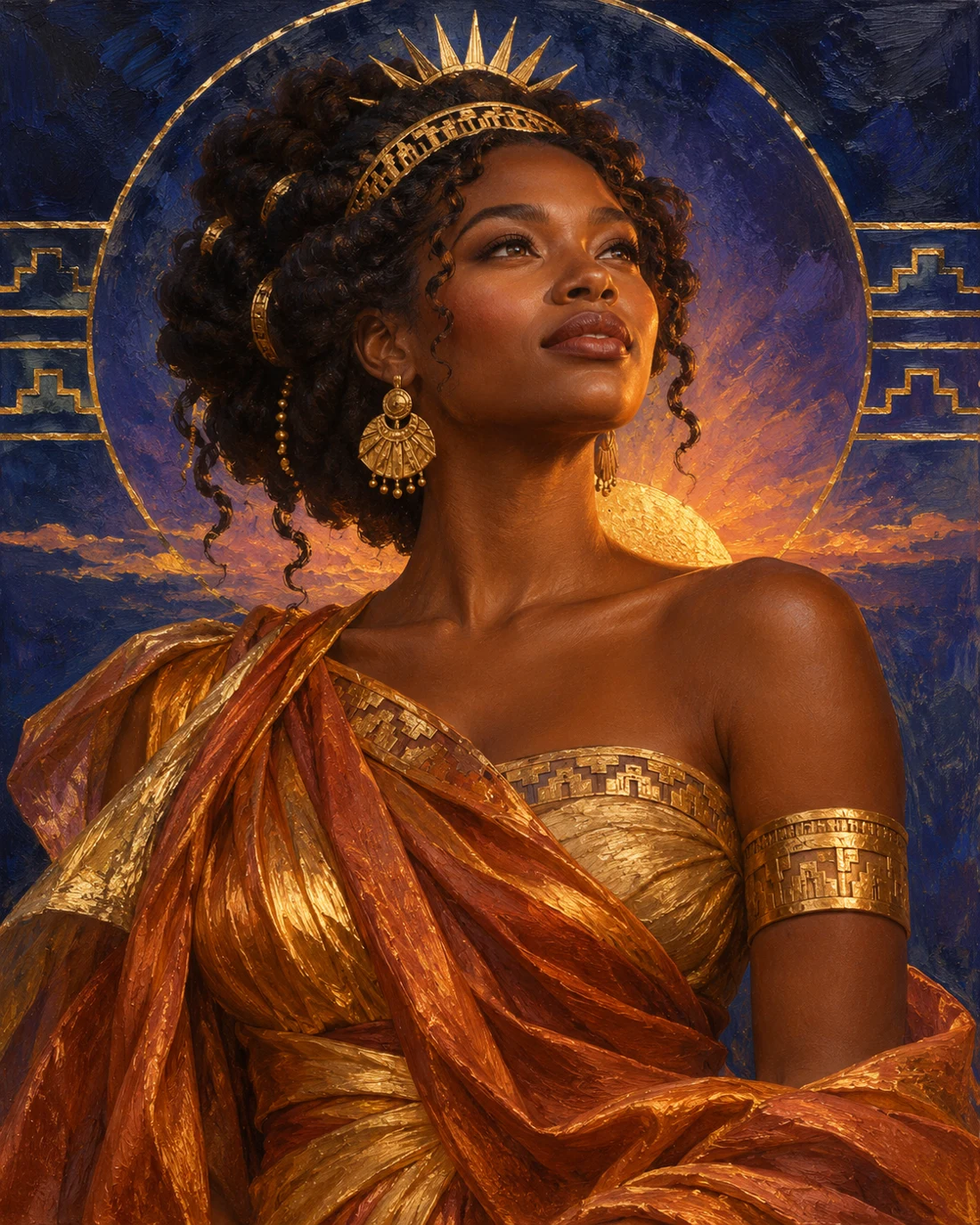
Contemporary African-inspired devotional portrait of Aya
AyaContemporary African-inspired interpretationDownload portrait ↓
FOUNDATIONS / 12 MODULES / 60 QUESTIONS

Study the world behind the devotion.

Read the long-form learning essays ↗ · Full FAQ ↗

Open the expanded study dictionary ↗

A rigorous introductory course in historical context, source literacy, and the Circle’s contemporary practice. Work through the modules in order, return to difficult material, and use the linked readings. Estimated study time: about five hours, plus optional reading and research.

Every module ends with “Test your knowledge.” You receive a percentage, an explanation of every answer, and unlimited retries. No passing threshold exists. Neither scores nor course completion determine membership; naming review remains separate.

Signed-in attempts are saved for you and Antoine to review. Other members cannot see your scores. Anonymous practice is available without saving; it will not appear in Antoine’s dashboard. Scores reflect a knowledge check, not your sincerity or spiritual worth.

Sign in to save learning progress ↗
GUIDED READING / 25 MINUTES

1. Akkad, Mesopotamia, and historical time

Learning objectives

  • Separate a place, an empire, and a language.
  • Use approximate chronology responsibly.
  • Avoid projecting a modern nation onto ancient communities.

Begin with the scope

In everyday conversation, Akkadia may mean several things. For this course, Akkad refers to the ancient city and the empire associated with its dynasty; Akkadian refers especially to the language and the traditions expressed through it. Mesopotamia is the wider regional frame. A map label is not a complete description of the people who lived there. Always ask which period and place a source addresses.

The imperial period

The Met describes the Akkadian period approximately as 2350–2150 BCE. Sargon brought previously competing southern city-states under his rule through conquest. Naram-Sin was a later ruler of the dynasty. Exact chronological schemes differ; approximate dates are more useful here than pretending one modern date list is beyond dispute. The ancient city of Akkad has not been securely located.

Empire is not the whole language history

Akkadian-language history extends beyond the imperial dynasty. The Circle studies Akkadian-language traditions, including Babylonian and Assyrian settings, rather than limiting every practice to the reign of Sargon. A text from a later setting cannot be relabeled as imperial-period evidence merely because it is written in Akkadian.

A historian’s notebook

Create three columns: place, date or period, and type of evidence. Add a fourth for uncertainty. When a source gives an approximate date, retain its qualifier. Separate an ancient ruler’s claim about power from a modern evaluation of that claim. Religious interest does not require admiration for conquest or treating royal ideology as the Circle’s ethics.

Research and reflection workshop

Explain to an imaginary new visitor why “Akkadian” does not identify just one short period. Include one uncertainty you would preserve.

Optional device-only storage. Notes saved here stay in this browser and are not sent to Antoine. Avoid personal or sensitive information on shared devices. Browser clearing can remove them.

Readings and references

Historical readings and contemporary Circle policies are identified separately. Consult the page’s author, dates, and bibliography. An unavailable link is not permission to invent its contents.

SELF-CHECK / MEMBERSHIP IS UNAFFECTED

Test your knowledge

Choose one answer for every question. All five questions have equal weight. Scores are correct answers ÷ five × 100. You may refer to the reading and retry.

1. What is the best first question about an “Akkadian” source?
2. Which statement about the city of Akkad is appropriately cautious?
3. How should you use a later Akkadian-language prayer?
4. What does an approximate date range communicate?
5. Which ruler belongs to the Akkadian dynasty discussed here?
VISITOR → RESEARCHER → ACTIVE MEMBER

There is no physical attendance requirement.

The Circle is an online, goddess-centered Pagan community. Solitary practice is a full way to participate. Live gatherings are an invitation, and absence does not make devotion less valid. You do not need a shrine, purchases, a camera, or a microphone.

Public reading is your visitor stage. You may study at your own pace without choosing a name immediately. A signed-in researching visitor can ask private questions; active chat and voting begin only after Antoine reviews and approves a completed naming submission.

Your first gathering

Check the published start time in America/Chicago and the cancellation notice. Read the service beforehand. You may introduce yourself by your devotional name, type only, or silently read. No spiritual experiences or private history must be disclosed.

If your chosen name changes

Research can change understanding. Submit a Name change request with the proposed name, meaning, pronunciation, sources, and reason for revision. Keep using your approved name until Antoine reviews the change; asking does not automatically remove active access.