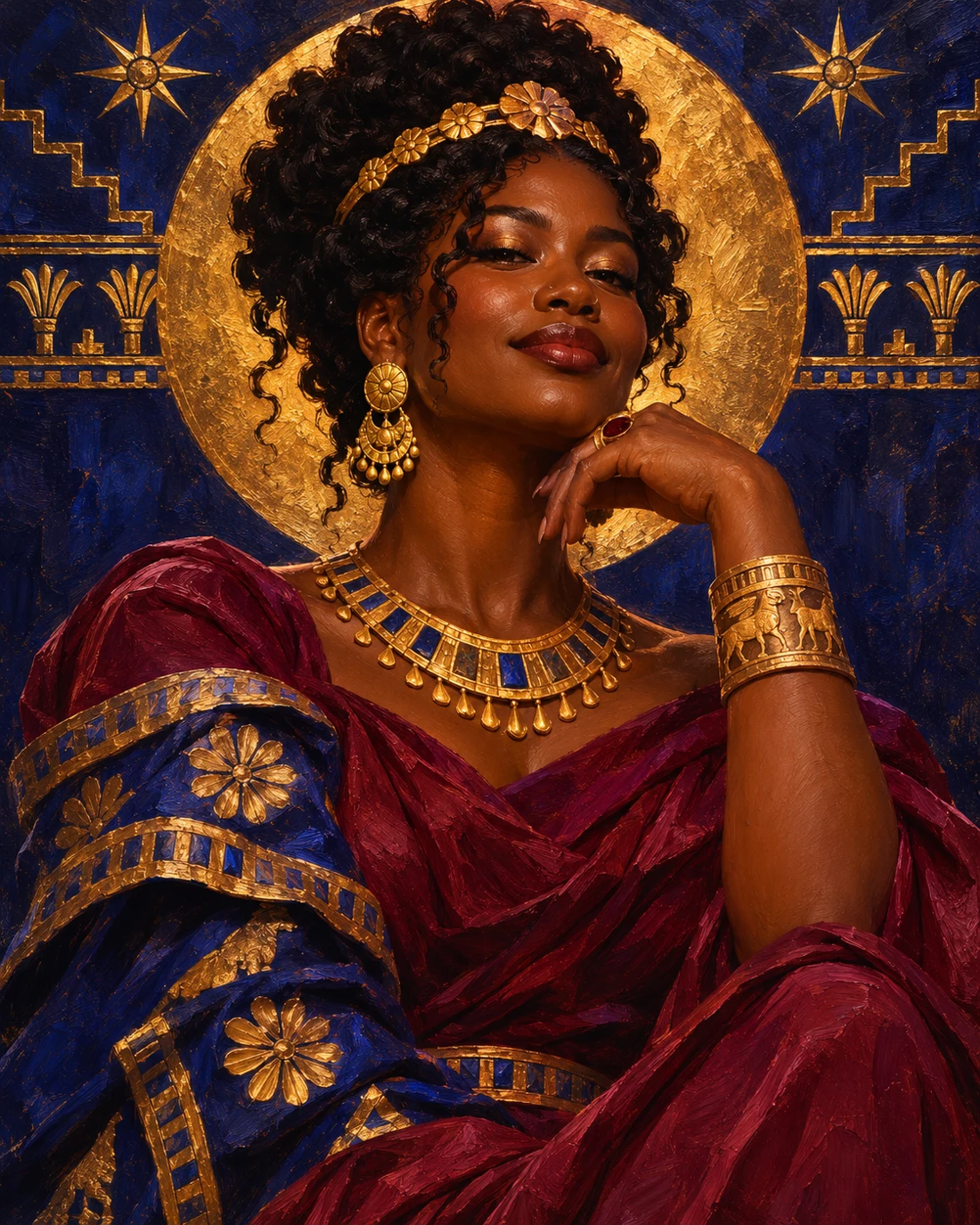
Rap as a contemporary vessel for goddess devotion. Sources in the notes. Meaning in the delivery.
A PERSONAL EXPRESSION OF DEVOTIONLISTEN / FEATURED ALBUM
Music in the Circle.
Listen to the music on YouTube or Spotify, or explore the words through the accompanying lyric book.
Press play on something new.
Load the YouTube player when you are ready. Loading connects to YouTube; playback does not start automatically.
YouTube controls playback availability, ads, sign-in requirements, and regional restrictions.
ALSO LISTEN / SPOTIFY
Listen on Spotify.
Load the Spotify player to explore this album. Loading connects to Spotify; playback starts only when you choose.
Spotify controls playback availability and may offer previews or require sign-in.
TAŠMĒTU-ATKAL / ANTOINE
Why I chose this voice.
I brought rap and Akkadian goddess prayer together as a personal expression of devotion. This page explains that choice and how you can engage with the work—even if rap is not music you enjoy. You do not need to write a song, imitate my style, or share my musical preferences to find meaning in a prayer.
01
Why I brought rap and prayer together
I chose rap because it gives me a way to speak directly, tell a story, and give sustained attention to words. As a teacher, writer, and artist, I work through language. Bringing that language into goddess devotion lets my creative voice and religious reflection meet. This is my personal artistic choice; it is not a musical requirement for the Circle.
02
A conversation with ancient sources
My approach places contemporary expression in conversation with Akkadian goddess traditions. Historical prayers give us material to study, including forms of address and petition. My interpretation belongs to the present. I do not claim that ancient Akkadian worship was rap or that my artistic choices reconstruct its original sound. The prayer editions linked here provide historical context, not verification that every lyric reproduces an ancient text.
Rhythm gives spoken words a shape that I can return to. A phrase may draw my attention differently when I hear its emphasis, its pauses, or its return. I use that possibility to make room for reflection. My devotion does not depend on a particular tempo, rhyme density, or production style, and neither does yours.
04
The voice I bring to devotion
I do not have to set aside a contemporary artistic voice to approach an ancient goddess. For me, religious expression can include the language and forms through which I already think and create. I also recognize rap as an art with its own history. Bringing traditions into conversation requires acknowledging their differences rather than claiming that they have always been the same.
05
Words, meaning, and responsibility
The meaning matters more than asking anyone to admire my delivery. I want listeners and readers to consider what a prayer addresses, what it asks, and what responsibility the speaker accepts. My personal interpretation must remain distinguishable from historical evidence. The presence of a citation does not turn my theology or artistic choice into an established ancient fact.
06
Why I pay attention to delivery
A voice can emphasize, interrupt, linger, or make room for silence. Rap gives me a form in which those choices can carry meaning alongside the words. Scholarship on flow helps explain that relationship between rhythm and delivery. It does not prescribe my worship or establish a spiritual effect. My reason for using the form is personal expression and attention, not a promise that a beat produces a religious experience.
You can dislike the musical style and still find something useful in the words. Appreciation of rap is not a condition of membership, sincerity, or devotion. You are free to approach this work as a reader, a listener, or someone who engages with only a small part of it. The teaching here is how this expression can serve reflection—not how to become a rapper.
08
Reading is also a way to engage
The lyric book offers a written point of entry. You may read slowly, pause over a phrase, or consider a passage without playing the recording. You can distinguish a literal reference from my interpretation and decide what speaks to your own practice. Reading does not need to reproduce the sound or cadence of my performance.
09
A place in solitary worship
If you choose to use the music, you might listen to one selection, stop the player, and spend a moment in silence. You might instead read a passage and write your own reflection. These are optional contemporary devotional suggestions, not recovered ancient ritual instructions. The work can accompany a complex shrine, a simple space, or a quiet moment without objects.
10
Your devotion remains your own
My task as Founder and Teacher is to explain why I made these choices and give you enough context to consider them thoughtfully. It is not to make your practice a copy of mine. You may use the work, question it, take meaning from part of it, or worship without it. Neither listening nor buying the book is required to belong to the Circle.
You can use the words without preferring the music.
Listen, read, pause, or reflect in silence. Your musical taste does not determine the value or sincerity of your devotion.
Edited cuneiform text, transliteration, translation, and commentary. Includes a lifted-hand prayer to Tashmetu. Read the line numbering and fragmentary passages carefully.