
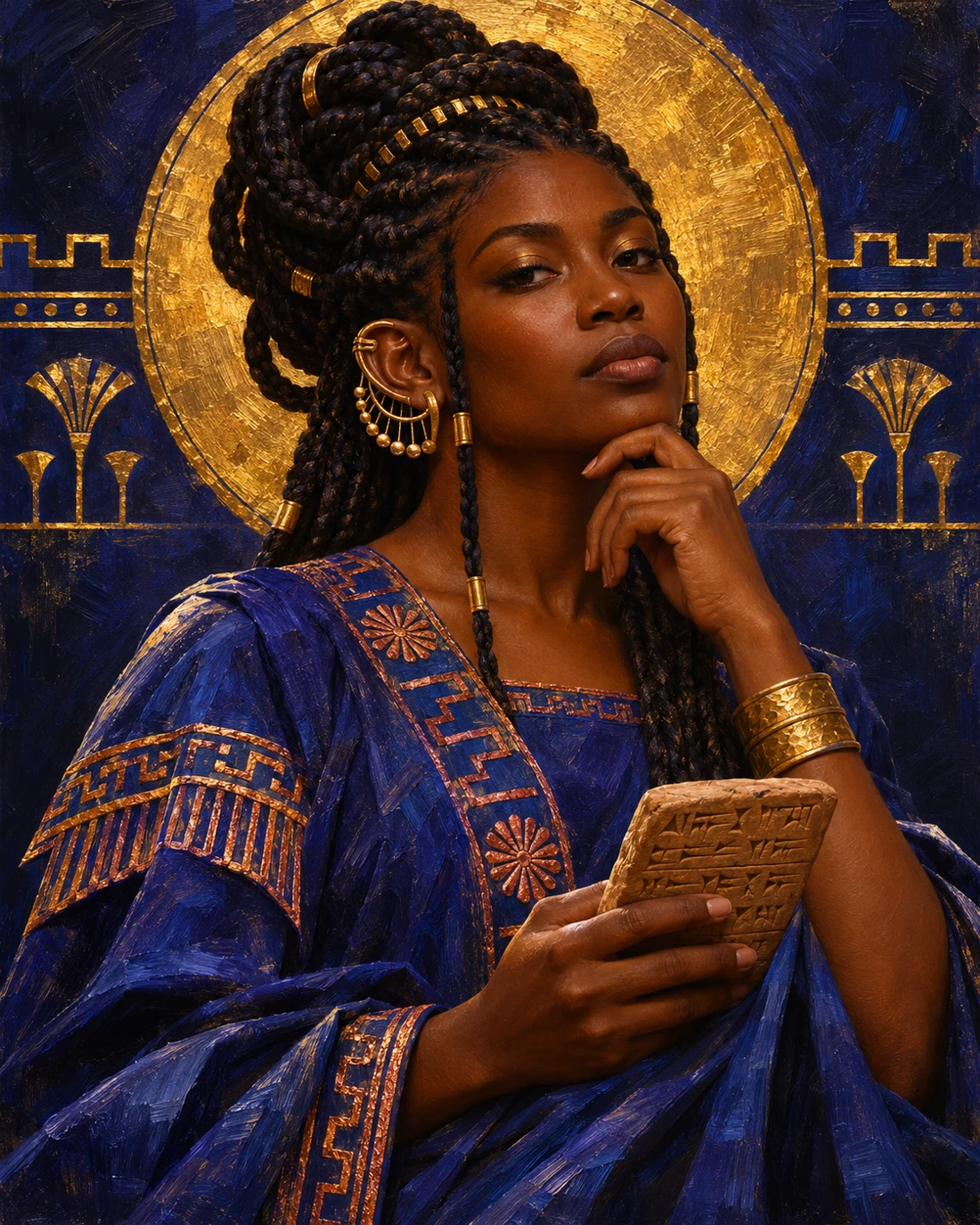
A name can express a relationship, a responsibility, and a commitment to learning. Within this Circle, I use the devotional name Tašmētu-atkal, translated as “I trusted in Tashmetu.” My given name is Antoine. Adopting this name connects my contemporary practice with an ancient naming tradition while keeping my own responsibilities visible.
Tašmētu-atkal is a personal name, not a goddess. It is documented among Babylonian women’s names. The evidence establishes historical use; it does not supply a complete biography of a single ancient person whose life I claim to continue. My use is a contemporary devotional adoption. [Names]
Tashmetu’s associations with wisdom and hearing provide a meaningful connection for my work as a teacher, scholar, and writer. I interpret that connection through the responsibility to listen carefully. This is my personal application of the historical material. [Tashmetu]
Teaching requires attention to another person: what they understand, what they are trying to express, and what prevents participation. My work in special education returns me to these responsibilities. Difficulty is a reason to explain differently, provide another example, or make room for another way of responding.
The historical translation remains “I trusted in Tashmetu.” The commitments I draw from it—patient teaching, attentive listening, and willingness to revise my understanding—are contemporary devotional interpretations. They are not additional words hidden inside the ancient name.
Alongside my name I use Ummânu, a term associated with expertise and scholarship that could describe a teacher or tutor in particular contexts. Here it identifies my educational work. It is a contemporary application, not a claim to ancient priestly appointment. [Teacher]
As Teacher, I accept responsibility for material that members can examine. Historical claims should have sources. Translations should be credited. Uncertainty should be acknowledged. When the evidence changes an explanation, the explanation should change.
As Founder, I establish the initial framework: educational resources, membership processes, devotional guidance, and opportunities for connection. Founding status does not give me a permanent right to facilitate gatherings. Active members elect facilitators; my contributions remain open to questions under the same rules that apply throughout the Circle.
Most members will worship independently. Shared learning should strengthen their judgment. The naming lessons, historical references, and solitary practice suggestions support that independence rather than requiring constant direction from me.
My creative work also belongs within this identity. Rap offers a contemporary form for newly composed goddess prayers and personal reflection. Its relationship to ancient sources must remain visible: translation, adaptation, and original writing are different contributions.
The name brings teaching, study, devotion, and creativity together through an expression of trust. Beneath it, Antoine remains visible because the person who teaches and creates must remain accountable. To bear this name is to keep listening, studying, explaining, creating, and learning.
Sources for this statement
Cousin, Laura, and Yoko Watai. “Babylonian Female Names.”
Scholarly chapter ↗Horry, Ruth. “Tašmetu (goddess).”
Scholarly reference ↗Radner, Karen. “Royal Decision-Making: Kings, Magnates, and Scholars.”
Scholarly chapter ↗