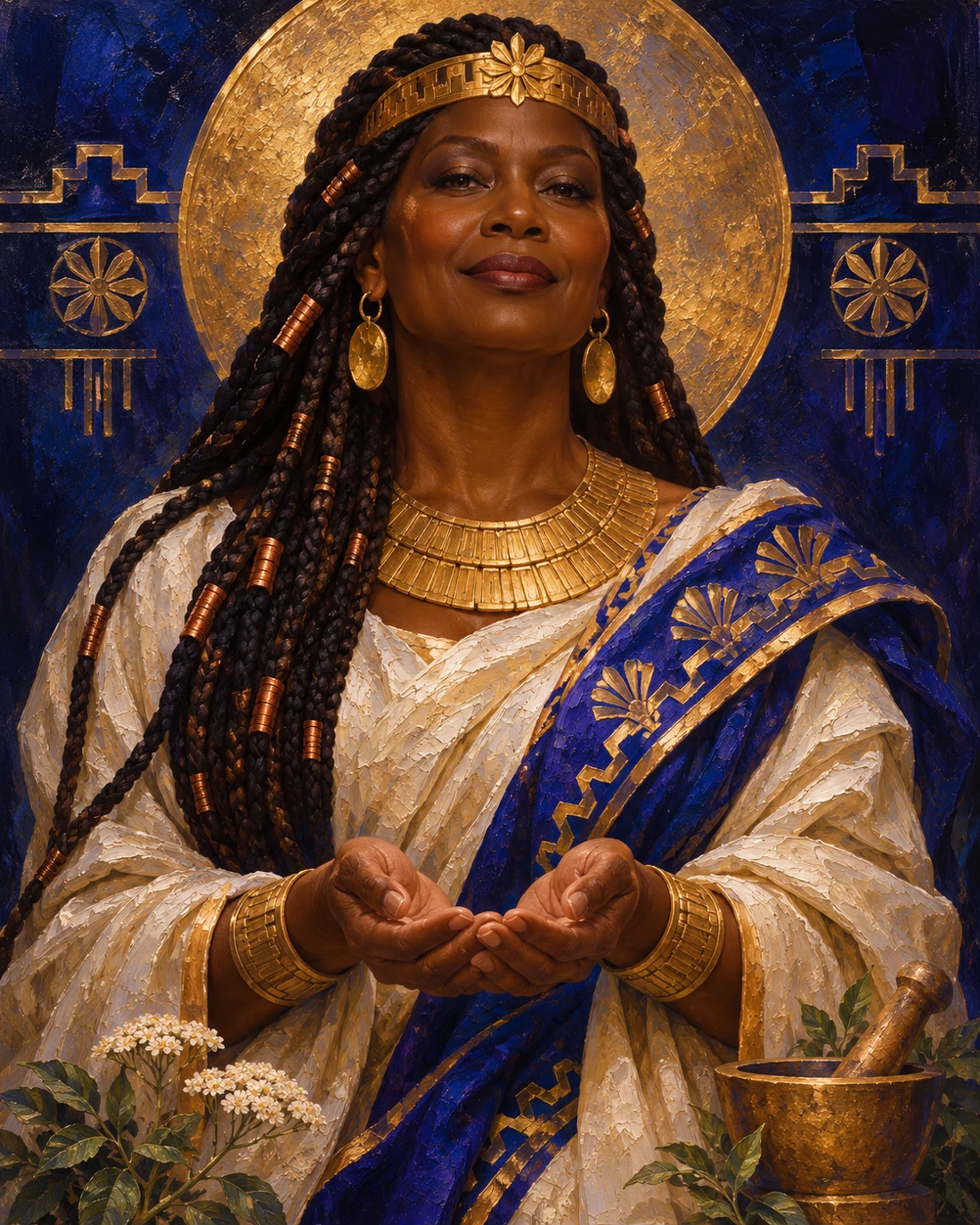
These arrangements are contemporary suggestions. Historical prayers and ritual directions inform specific elements; they do not establish one compulsory home altar. Choose materials you can maintain safely and comfortably. Nothing needs to be purchased to participate.
Some edited Akkadian ritual texts describe vessels and beer libations. That is evidence for those particular instructions, not a universal command to use alcohol or reproduce temple practice at home.
A stable table or cabinet, a sourced image or written goddess name, a washable offering vessel, and optional textiles or lighting. Keep a note explaining which choices are documented and which are personal. Ancient temple installations are not automatically household requirements.
02
A small shelf
One clean surface and a written name can organize attention. Add a cup or small bowl only if useful. Choose an electric light when flames are impractical. The compact arrangement is a contemporary adaptation.
03
A portable practice
Keep a reading, notebook, and optional small object in a pouch. This is a modern solution for travel and limited space, not a claim about an ancient devotional kit. Respect other people’s space and consent.
04
The simplest elements
A clean place, a short prayer, and an optional cup of water. Water is offered here as a practical contemporary choice; a goddess-specific historical claim requires its own evidence.
05
Without objects
Read, speak, reflect, or sit quietly. A person who cannot keep a visible shrine can still participate fully. Silence and accessible posture are welcome.
A simple modern observance.
Prepare your space and settle your attention.
Address the goddess by name.
Read a credited passage or your own prayer.
Reflect quietly, without requiring a sign or revelation.
Choose one practical expression of devotion.
Give thanks, close, and record questions.
This sequence is newly composed for contemporary use. A lifted-hand prayer provides historical material for study, while members may use a comfortable seated posture. Do not present an accessibility adaptation as a recovered ancient requirement.
Aya: a morning intention informed by her association with dawn. Gula: a prayer accompanied by practical care. Ishtar: reflection on courage, desire, and responsibility. Nanaya: attention to affection, consent, and reciprocity. Tashmetu: study and listening as the founder’s contemporary devotional application.
Choose scent-free and flame-free alternatives where needed. Do not leave perishable food out beyond safe limits. Avoid putting food, oil, alcohol, or wax into waterways or wildlife habitats. No required fasting, ingestion, or physical strain. Prayer and care can accompany professional treatment; the Circle makes no promise of medical outcomes.
A sustainable rhythm
Begin with a weekly ten-minute observance if that suits you. Keep study separate from pressure to perform. You can change the frequency, objects, and length as your circumstances change. Every-other-Friday gatherings provide connection without making private devotion dependent on attendance.